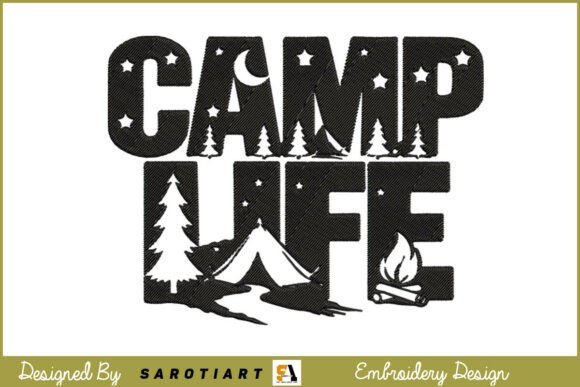
Camp Life Camping Embroidery Design Review
When I first opened the file for Camp Life Camping Embroidery Design, my immediate thought wasn't about the stitch count or the specific file format. It was about the vibe. As someone who spends a lot of time curating assets for handmade shops and client projects, I look for designs that tell a story before they even hit the hoop. This piece, with its focus on "Love Hands" line art, strikes a chord that feels both nostalgic and incredibly modern. It isn't just a generic camping graphic; it has a personality that suggests warmth, connection, and the simple joy of being outdoors.
The concept is straightforward yet effective. The design centers on hands holding each other, likely near a campfire or under a starry sky, rendered in clean lines. For an embroidery designer, this is a goldmine because line art translates beautifully to thread. Unlike complex illustrations that can get muddy when stitched, this style relies on the negative space and the flow of the stitches to create depth. It creates a mood of intimacy and shared adventure, making it perfect for anything from a baby's onesie to a boutique tote bag.
Real-World Application: From Digital File to Finished Product
Let's talk about how this actually performs in a real project scenario. Imagine you are preparing for the upcoming holiday season or a summer craft fair. You have a stack of canvas tote bags sitting on your table, waiting to be transformed into personalized gifts. This is where Camp Life Camping Embroidery Design shines. If you were to stitch this onto a natural-colored canvas bag, the contrast would be crisp and inviting. The line art allows the texture of the fabric to peek through, adding a tactile element that printed graphics simply cannot achieve.
I also see this working exceptionally well on custom apparel. Picture a soft, heather-grey sweatshirt with the design placed over the heart area. The "Love Hands" theme pairs perfectly with the comfort of a hoodie, creating a garment that feels like a hug. For small business owners selling custom apparel, this design offers a high perceived value. Customers don't just buy a shirt; they buy a feeling of belonging to a community of nature lovers. When you use this as a tote bag design or for sweatshirt embroidery, the finished product looks professional and cohesive, elevating a basic item into a statement piece.
Another strong use case is for nursery decor or baby items. The gentle curves of the hands and the lack of aggressive angles make it safe and soothing for a child's room. Stitched onto a receiving blanket or a bib, it becomes a cherished keepsake. Parents love items that signal their values, and a design celebrating connection and the outdoors resonates deeply. It transforms a standard baby embroidery project into something sentimental enough to be passed down.
Navigating Technical Challenges and Fabric Choices
However, not every surface is created equal, and as an experienced reviewer, I need to point out where caution is required. While this design is versatile, it demands respect for the materials you choose. If you plan to use this for embroidered patches or items that require frequent washing, such as kitchen towels or aprons, you must ensure your stabilizer choice is robust. Line art can sometimes suffer if the underlying support isn't firm enough, leading to puckering that distorts the delicate lines of the hands.
Fabric texture plays a huge role here. On a smooth cotton tee, the running stitch elements will look sharp. But on a heavily textured fleece or a thick wool blend, the fine details might get lost. The thread needs to sit flush against the material to maintain the clarity of the design. If you are working with stretchy fabric like jersey, you absolutely need a cut-away stabilizer to prevent the design from warping after the garment is worn and washed. Without proper stabilization, the "love" aspect of the design could literally fall apart.
There are also limitations regarding size. If you are using a small hoop, perhaps for a cap or a hat brim, you need to be mindful of the detail density. While the design is mostly line art, if there are any fill areas representing a fire or stars, compressing them too much can result in a stiff, raised patch that feels uncomfortable against the skin. Always test the stitch density on a scrap piece of the actual fabric you intend to use. If the design looks too dense or the lines merge together, it may not be suitable for very small applications without resizing.
Visual Impact and Brand Consistency
From a branding perspective, this design is a strategic asset. In the world of Etsy sellers and craft business owners, visual consistency builds trust. A messy or poorly executed embroidery job can undermine the quality of the entire shop. Camp Life Camping Embroidery Design offers a clean aesthetic that looks intentional and polished. When you present a mockup of this design on a dark fabric versus a light one, the versatility allows you to showcase multiple product variations without losing the core identity of the image.
This adaptability is crucial for commercial embroidery. Whether you are creating a collection of matching sets for a family reunion or designing merchandise for a local outdoor club, the design holds up well across different mediums. It works equally well as a standalone embroidery project or as part of a larger collage. The simplicity ensures that the message remains clear regardless of the background color or the type of thread used. When customers see a well-executed piece of handmade product, they are more likely to engage with the brand and return for future purchases.
Practical Designer Notes for Success
Before you rush to load this embroidery file into your machine, there are a few critical steps to take. First and foremost, always test the design on scrap fabric. This is non-negotiable. You need to verify that the hoop size accommodates the design without cutting off any edges and that the tension settings produce a clean finish. Check the thread colors carefully; a black thread on a dark background might disappear, while a white thread on a light background might lack definition. Sometimes, switching to a slightly contrasting shade can make the applique design elements pop significantly.
If you are planning to sell finished items made with this design, double-check the licensing terms. Many digital products come with restrictions on commercial use. Ensure you have the right to resell the physical goods created from this file. Also, consider the washability of your final product. If you are making a holiday gift intended to last, use high-quality threads that won't fade quickly. Inspect the small details closely, especially around the fingers of the hands, to ensure no loose threads or gaps mar the presentation.
Finally, think about the context of your customer. Are they looking for a rugged outdoor accessory or a soft, sentimental gift? This design bridges that gap effectively. By treating it with care and attention to detail, you transform a simple digital asset into a tangible memory. Whether you are creating a digital embroidery file preview for your shop or stitching the final piece for a client, Camp Life Camping Embroidery Design provides a solid foundation for creativity. It reminds us that the best designs aren't just about technical perfection; they are about the emotion they evoke and the stories they help us tell through thread.